Instinct or Ideology? Can Sigmund Freud’s Theories Explain Mass Political Behavior?
Why do millions of people rally behind leaders, ideologies, or movements—sometimes against their own rational interests?
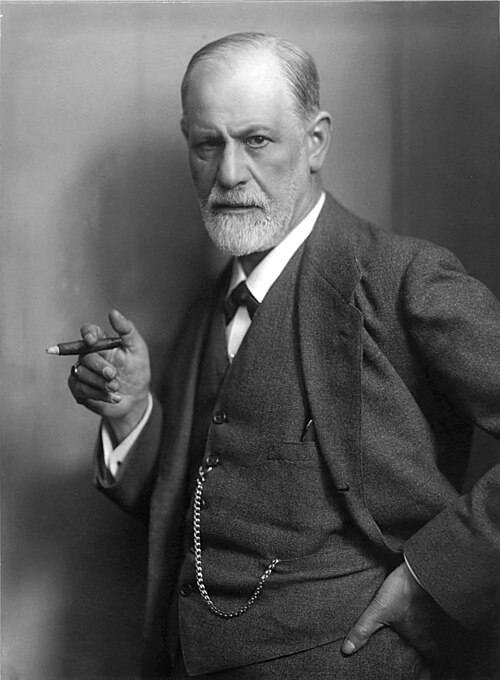
To understand this, we turn to Sigmund Freud, the father of psychoanalysis, who argued that human behavior is driven not just by reason—but by unconscious desires, instincts, and deep psychological forces.
The Unconscious Mind and Politics
Freud believed that much of human behavior originates from the unconscious mind, shaped by childhood experiences and repressed desires.
In politics, this suggests that decisions are not always rational—but influenced by emotional and psychological impulses beneath the surface.
• Id: Instincts and desires (emotion-driven)
• Ego: Rational decision-making
• Superego: Moral and social control
Crowd Psychology: The Power of the Masses
In his work Group Psychology and the Analysis of the Ego, Freud explored how individuals behave differently in groups.
He argued that in crowds, individuals lose their sense of independence and become emotionally aligned with a leader.
This explains why political rallies, movements, and mass protests often display intense emotional unity.
- Leader Identification: Followers emotionally attach to a leader
- Loss of Individuality: Personal judgment weakens
- Emotional Amplification: Simple ideas spread rapidly
Politics as Emotional Theatre
Freud suggested that political movements often tap into primitive instincts—such as fear, aggression, and belonging.
Mass behavior tends to revert to simpler emotional responses rather than complex reasoning.
The 2026 Perspective: Mass Behavior in the Digital Age
Today, political behavior is shaped not only by crowds—but by digital networks and social media ecosystems.
Yet Freud’s insights still apply: emotional contagion, group identity, and leader attachment remain central.
- Online Echo Chambers: Reinforce group identity
- Viral Narratives: Spread emotional messages quickly
- Digital Leaders: Influence millions instantly
The Criticism
Freud’s theories have faced criticism for being non-scientific and difficult to test empirically.
Modern political psychology uses data, behavioral science, and neuroscience to explain mass behavior more precisely.
- Supporters: Freud explains emotional drivers of politics
- Critics: Lacks scientific rigor
- Balanced View: Foundational—but incomplete
The Bigger Question
Are political movements driven by rational debate—or by subconscious forces?
And are leaders shaping ideas—or simply channeling collective emotions?
Conclusion
Sigmund Freud’s theories offer a powerful lens to understand mass political behavior—especially the emotional and unconscious forces behind it.
While not fully scientific by modern standards, his ideas remain deeply relevant in explaining why people follow, believe, and mobilize.
Because in 2026, the key to political influence may not be logic—it may be psychology.


